A Fragile Rebound and Overlooked Cracks

Market Review:
Six Signals This Week, but the Market Focused on Only One
The core narrative driving the market this week was: U.S.-Iran negotiations were more conciliatory than expected → reduced risk of a Strait of Hormuz blockade → WTI plunged 13.4% → easing inflationary pressures → renewed expectations for interest rate cuts → a broad rebound in risk assets. However, this narrative hinges on the negotiations progressing gradually, making this week’s rebound fragile.
We estimate a 30% probability of escalation and a 60% probability that the ceasefire will hold and negotiations will continue until the April 21 deadline.
No major data releases are scheduled for next week; we will continue to monitor the situation in Iran and U.S.-Iran negotiations.
(1) The U.S. and Iran held 21 hours of talks without reaching an agreement, but relations did not sour.
Both sides indicated that negotiations could continue. Vance stated that the U.S. had made its bottom line clear, while Iran noted that 2–3 issues remained unresolved, primarily major concerns such as nuclear weapons and control of the Strait of Hormuz.
Commentary: Gradual de-escalation of risks drove WTI down 13.4% and the S&P 500 up 3.56%; if a second round of talks begins before April 21, the bearish sentiment in crude oil will intensify further.
(2) Oil plunged 13.4% this week, falling to $96.57 per barrel
The market views the absence of hostilities as good news, hence the sharp drop in oil prices. However, the issue is that there are still very few ships in the Strait, and Iran has not yet fully lifted restrictions; this decline may have been excessive.
Commentary: The market may have overpriced the scenario of successful negotiations. Moving forward, monitor: successful negotiations = oil breaks below $85; escalation of tensions, requiring stop-loss = oil breaks above $110
(3) Federal Reserve officials have begun discussing whether to raise interest rates
The minutes from the March Federal Reserve meeting show that some members have started raising the option of a rate hike (though no one has actually supported it yet). Three officials — Goolsbee (Chicago Fed), Jefferson (Fed Vice Chair), and Daly (San Francisco Fed) — all noted that inflation could rise further and that caution is needed.
Commentary: The 2-year Treasury yield at 3.81% (up 34 bps since the start of the year) has partially priced in a delayed rate cut path for 2026, but if core PCE inflation exceeds 0.3% month-over-month for two consecutive months, the Fed may raise rates.
(4) Inflation data looks good on the surface, but one warning sign has been overlooked
March’s core inflation came in at 0.20% month-over-month, below the expected 0.3%, which looks positive. However, the ISM Services Prices sub-index jumped to 70.7, the highest level since October 2022.
Commentary: This indicator typically signals trends 2–3 months ahead of inflation data, suggesting that if energy prices stabilize rather than continue to fall, inflation may rise further in the coming months.
(5) Employment: The employment situation in the service sector is dire, with a reading of just 45.2 (below 50 indicates contraction)
This is the most underestimated data point of the week. While the service sector as a whole remains in expansion (54), the employment segment within it is already contracting. Chicago Fed President Goolsbee described the current state as one of low dynamism, characterized by “few hires and few layoffs.”
Commentary: A drop in the services sector employment PMI sub-index below 40 indicates that the labor market is truly in trouble.
(6) U.S. Economic growth in the previous quarter was only 0.5% (annualized), lower than previously estimated.
It was revised down from 0.7% to 0.5%. Although core demand (such as factory orders) remains solid, the overall economy is slowing.
Commentary: The buffer against risks is shrinking. This provides justification for the Fed to adopt a wait-and-see approach.
U.S. Stocks
This Week’s Price Action Projections:
1️⃣ S&P 500 Futures:
(1) Around 6,850: Option pivot point. If it holds → Market makers will support the rally; if it fails to hold → Continued consolidation
(2) Around 7,000: Rebound or reversal point. A breakout with high volume → Trend reversal confirmed; A breakout with low volume → a second pullback
(3) Around 6,640: the line of faith for bulls and bears; a break below → a complete collapse of the long-term logic, requiring a complete shift in outlook
2️⃣ Nasdaq 100 Futures:
(1) 25,100–25,250: a zone of supply pressure; a breakout → the rebound continues; a failed breakout → an immediate reversal
(2) 26,000: Moving average + supply ceiling; breakout with high volume → short squeeze-driven surge; rejection → second test of lows
(3) 24,410: Weekly bullish/bearish dividing line; break below → long-term logic collapses, shift to bearish
Market Analysis:
The current structure is a bull trap; when leading stocks catch up in their decline, the index’s drop will exceed expectations
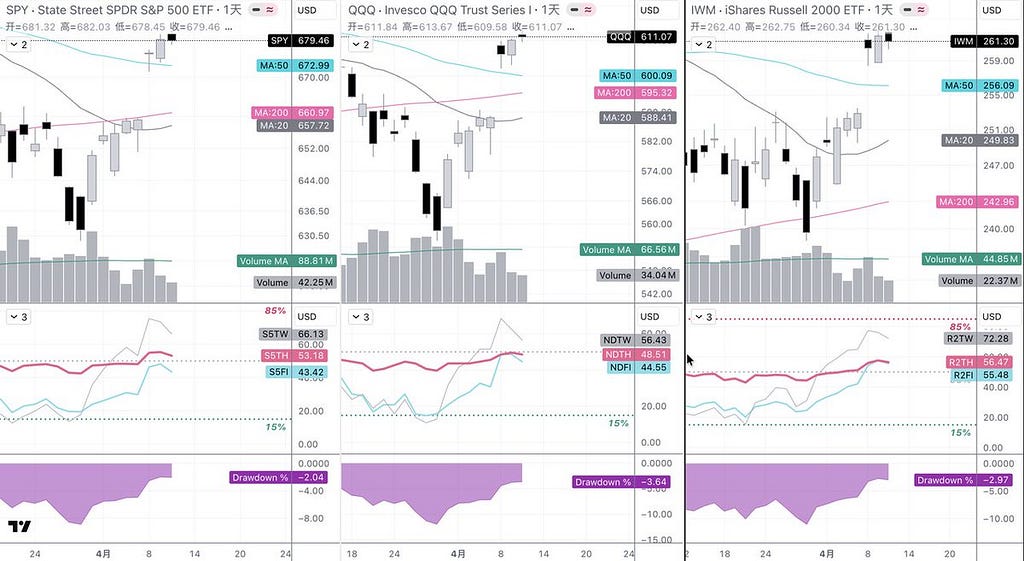
(1) Index strength is illusory: Prices have moved above moving averages, but breadth is insufficient
- SPY has moved above MA50 & MA200, appearing strong on the surface
- S5FI is only 43.42%; over half of the constituent stocks remain below the 120-day moving average
- A few mega-cap stocks (the tech seven giants) are propping up the index alone; severe internal divergence
(2) Nasdaq Is the Most Dangerous: Strongest Price × Weakest Breadth
- QQQ has the highest relative price position among the three
- NDTH at 48.51% and NDFI at 44.55%, both below 50%
- A tiny handful of blue-chip stocks are propping up the market; once these leaders catch up with the decline, the index will collapse the fastest
(3) Small-Cap Stocks Are Relatively Healthy, But Have Vulnerabilities
- R2FI at 55.48%, the only one among the three major indices with 120-day breadth exceeding 50%
- R2TW at 72.28%, showing the broadest and most even participation in the rebound
- Weakness: Small-cap stocks are most sensitive to liquidity; they will be the first to take a hit if funding tightens
Sentiment:
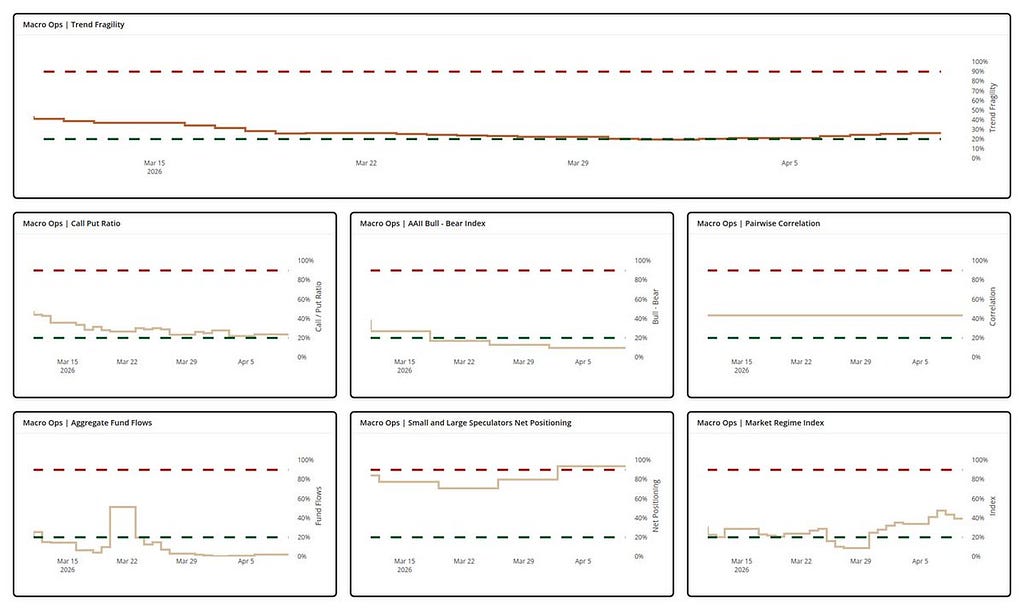
Retail investors have fled, capital is retreating, and the speculators’ bomb has yet to detonate
Rebound = Window for speculators with 92% long positions to reduce exposure
(1) The biggest hidden bomb: Speculators at 92% extreme long positions × price pressure
Speculators’ net long positions are at the 92nd percentile — a historically extreme level of crowding — yet prices cannot sustain the upward trend. Once stop-losses are triggered, concentrated liquidation of long positions → a waterfall-like stampede with no buffer. This is the biggest time bomb in the current market.
(2) Two extremes at odds: Retail investors have fled, but speculators haven’t
Retail investors (AAII ~20%) have already cut losses and exited, while 92% of speculators are still clinging to their long positions. The first wave of selling wiped out retail investors; the true main downtrend — the, the moment speculators are forced to flee — has not yet begun.
(3) No capital support: Rapid retreat after a brief influx
On March 22, capital inflows surged to ~60% before rapidly retreating to ~25%; bottom-fishing capital tested the waters and withdrew immediately. The rebound lacks genuine momentum.
(4) The Only Positive Sign: Correlation Has Not Exploded, but the Worst Is Yet to Come
Pairwise Correlation ~40%; there has been no market-wide synchronized sell-off, so the current situation remains an orderly correction. The true panic stampede is still ahead.
Position Cost Distribution
S&P 500 Futures: The bottom structure is solid and the bias is bullish, but the rebound is merely a false rally propped up by short-covering. Until there is a breakout above 7,000 with increased volume, all optimism remains mere speculation.
1️⃣ Moving Averages and Breakout Price :
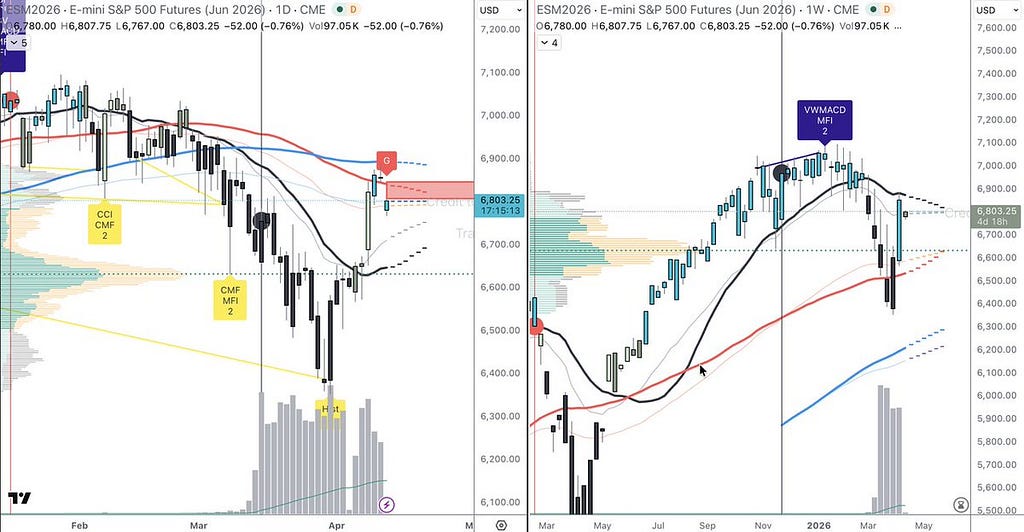
Long-term outlook is sound — the weekly chart maintains a healthy bullish alignment; the trend remains intact until a drop to 6,300
- Short-term outlook is fragile — all daily moving averages are above the price, making the rally akin to “climbing against a ceiling”
- The most critical price level is 6,640 (POC); this is everyone’s average cost basis. Only by holding this level can we confidently discuss a rebound
- The rally lacks volume support; gains are driven by short-covering, not a bullish advance
2️⃣ Options Momentum : The bias is bullish, but it’s still missing that final push
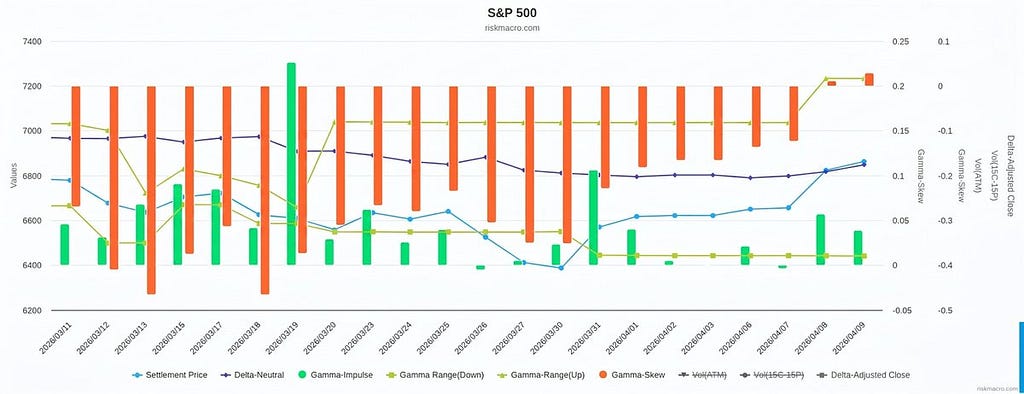
Market sentiment is optimistic (Call demand > Put demand), and market makers’ hedging positions are providing a price floor
- 6,850 is the tipping point: If it breaks above, market makers will be forced to buy and fuel the rally; if it fails to break above, the floor effect disappears
- Two resistance levels above: 7,000 (double pressure from open interest and moving averages), 7,240 (options ceiling)
- Two support levels below: 6,640 (core open interest), 6,450 (options defense line)
3️⃣ CFTC Analysis (Figure 7): Institutional anchors remain, but the rally’s fuel is borrowed
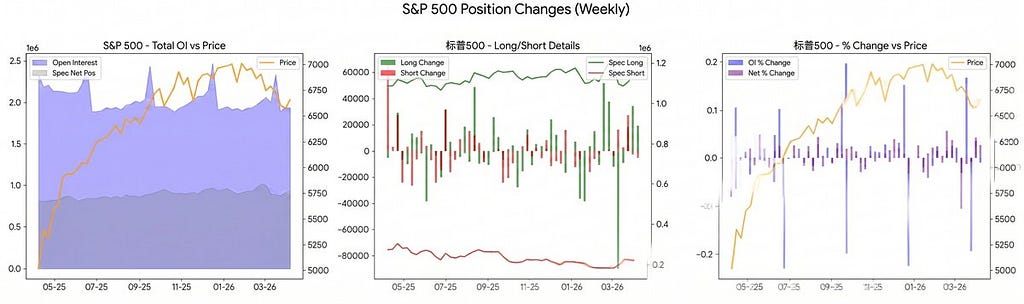
Major institutions (asset managers) hold heavy long positions with solid underlying holdings; they won’t collapse easily
- However, the driving force behind this rally is short-sellers capitulating and exiting, not new capital actively buying in — the quality of the rally is compromised
- Hedge funds still have 240,000 net short contracts hanging over their heads:
- If prices continue to rise → Short-sellers face margin calls, accelerating the rally
- If prices turn downward → Short sellers will re-enter the market, accelerating the decline
Nasdaq 100 Futures: The Nasdaq’s rebound is on borrowed time — it’s being propped up by short sellers’ money. Institutions are already pulling out, while hedge funds are increasing their short positions. The moment the fuel runs out is when the decline begins.
1️⃣ Moving Averages and Breakout Price :
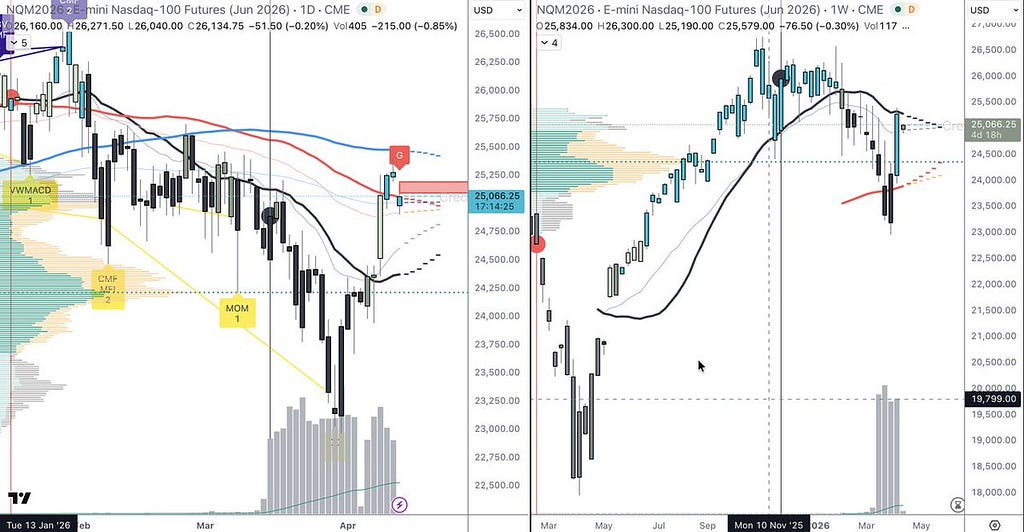
Long-term outlook is sound — the weekly chart shows a solid bullish alignment; as long as 24,410 holds, the major trend remains intact
- Short-term outlook is dangerous — all. All daily moving averages are above the price, which is barely clinging to the MA20; the slightest disturbance could send it tumbling
- The current price of 25,066 is right at the entrance to the 25,100–25,250 zone of heavy trading volume — this is the first real test of the rebound; if it fails, the market will retrace its steps
- There’s an even tougher ceiling above: 26,000 (double pressure from moving averages and trading volume)
2️⃣ CFTC Analysis : The stronger the rally, the more cautious you must be
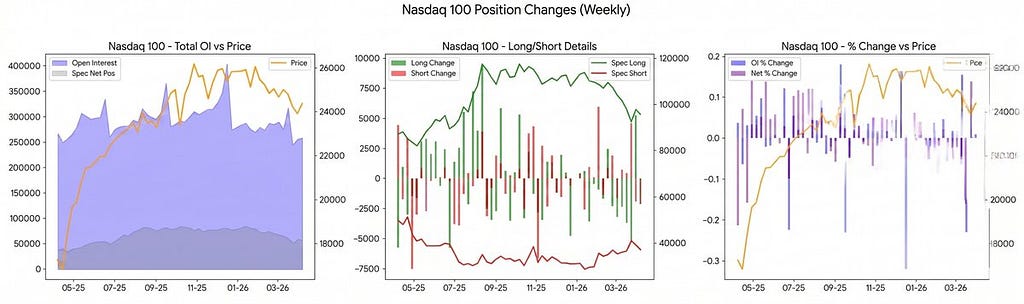
The nature of this rally is short-sellers admitting defeat and retreating, not new capital actively buying the Nasdaq out of optimism
- What’s even more dangerous: while prices are rising, major institutions are quietly reducing their positions — they aren’t adding to their positions to ride the rally, but are using the rebound to offload holdings and reduce risk
- Hedge funds not only failed to follow the rally but actually increased their short positions by 3,090 contracts against the trend; they now hold 89,382 short contracts
- These 89,382 short contracts are a ticking time bomb:
- Short covering is not yet complete → Prices can continue to rise for a while
- Once short covering runs out and prices stop rising → these 89,382 short contracts will immediately become a hammer to crash the market
U.S. Treasuries
This Week’s Price Projection:
2Y U.S. Treasury:
(1) Above 100.08: Upper boundary of a historically dense trading range + lack of momentum for a breakout amid hawkish consensus pressure + supply pressure zone following PD support
(2) 99.25–100.08 range: Current price at 100.025; high-volume trading zone above the 99.25 offset price. Bulls and bears are locked in a tug-of-war here; do not enter the market without a breakout accompanied by increased volume
(3) 99.13–99.25: This zone contains two key support levels (99.13 and 99.25). A break below 99.25 would invalidate the bullish structure, while a break below 99.13 would cause the moving average slope to turn downward, fundamentally altering the overall market sentiment.
10-Year U.S. Treasury: The bearish trend remains intact, but the optimal window for shorting may be closing.
The price is currently oscillating between the bottom support (110.68) and the bull-bear dividing line (111.44).
- Wait for a valid breakout above 111.44 before considering going long
- A break below 110.68 signals no floor below, and the downtrend will accelerate
- If neither a breakout nor a breakdown occurs, the market will remain range-bound; wait patiently for a signal
Bond Issuance:
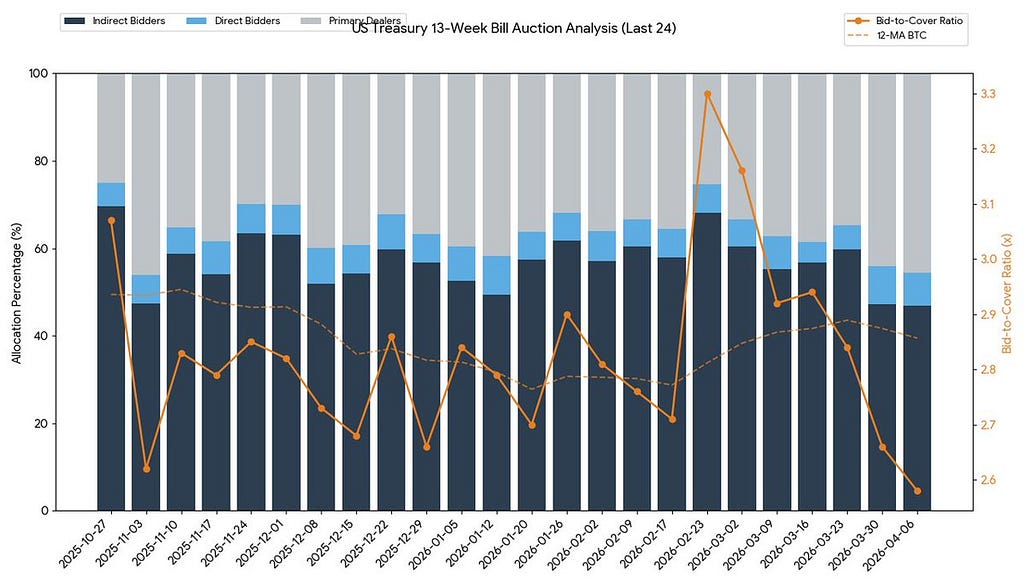
Demand has cooled significantly: The bid-to-cover ratio for this auction was only 2.58, significantly lower than the average of the previous 12 auctions (2.86), indicating a decline in market enthusiasm for short-term liquidity instruments.
Changes in investor structure:
- Indirect Bidders: Accounted for 46.82%, a recent low. As a group typically representing long-term investors such as overseas central banks, their reduced participation may reflect a temporary easing of global risk aversion or shifts in capital flows following the quarter-end.
- Primary Dealers: Their share of successful bids rose to 45.54%. With demand from other investors weakening, dealers were forced to absorb a larger share of the bids, which is typically viewed as a sign of poor auction quality.
Market Implications: The total bid amount has declined relative to the average. Combined with the lower bid-to-cover ratio, this suggests that market expectations regarding the short-term interest rate path may be diverging, or that marginal demand is diminishing due to increased supply.
Yield Curve Structure:
Broadly Flat with Short-End Divergence
The 2-year segment faced the heaviest pressure (primary dealers acting as market makers + rising yields) → 2s10s spread narrowed passively;
The 10Y-3M spread jumped by 4bp, the only “steepening” signal in the structure, but this was driven by anchored rate cut expectations at the 3-month end rather than genuine improvement in long-end demand;
A strengthening dollar coupled with the lack of expansion in ultra-long-end term premiums suggests the market is currently in a phase of “defensive risk-off” rather than a “resurgence of the U.S. Treasury bull market” — the yield curve structure imposes systemic pressure on the upside potential of the bond market.
Sentiment:
“Higher for Longer” has shifted from expectation to consensus, and market sentiment is in a phase of extreme hawkish consensus
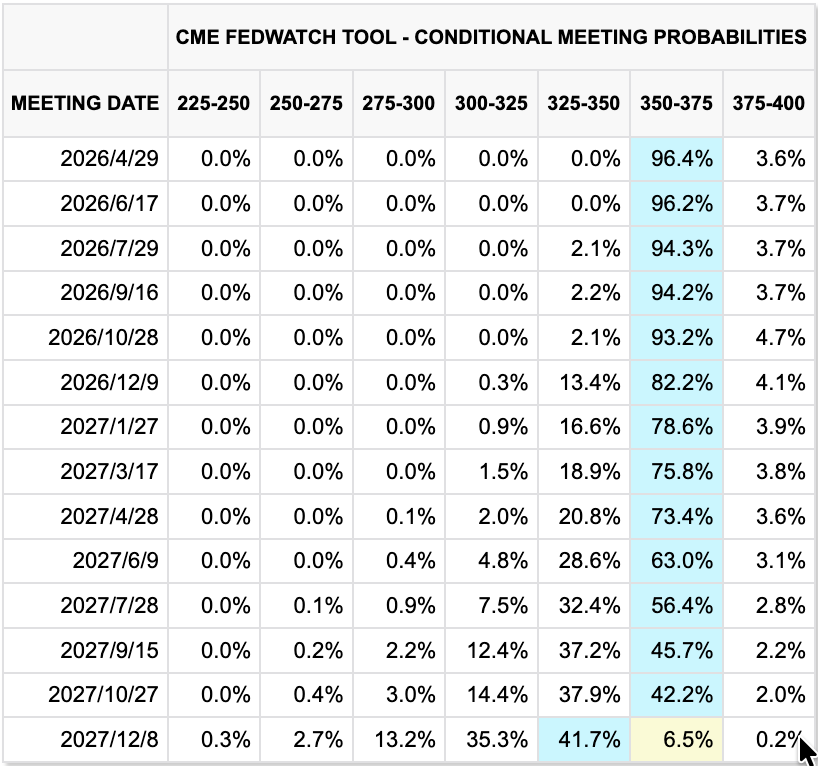
- The market is pricing in the Fed, remaining on hold throughout 2026, with the first rate cut coming no earlier than December 2026, and a cumulative total of approximately 2–3 cuts (50–75 bps) by the end of 2027.
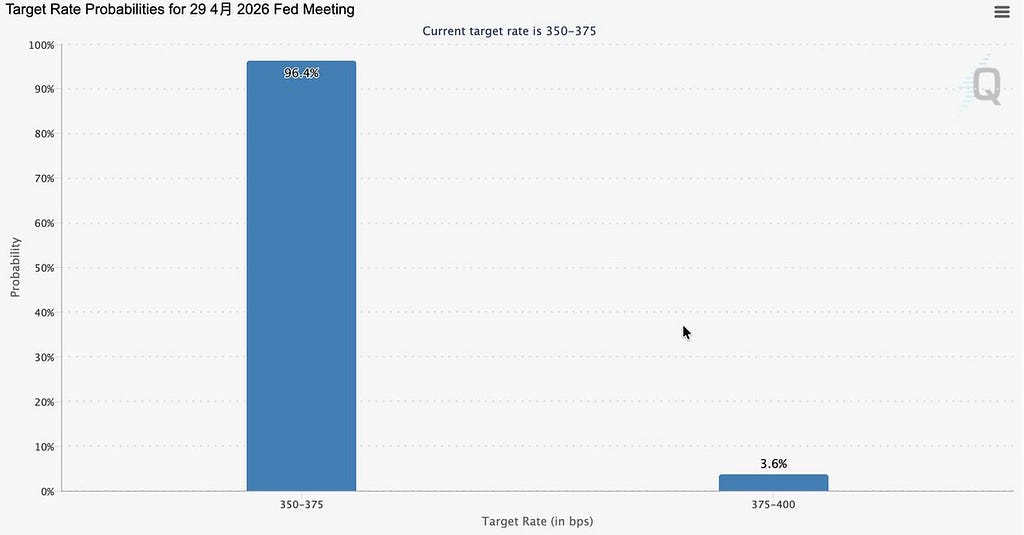
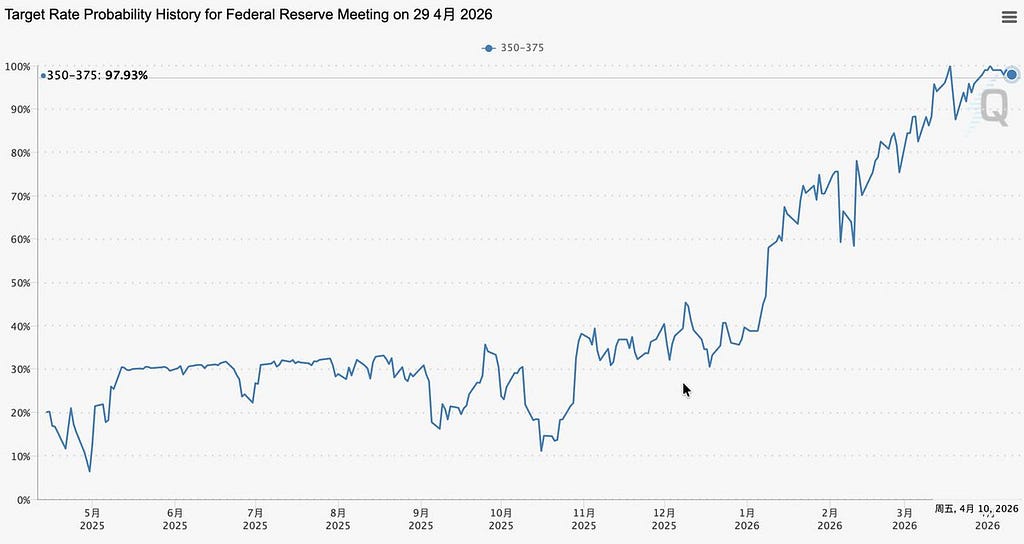
- Near-term (April–October): A 96%+ probability of no change = rate cuts are completely off the table, and the fuel for bond price appreciation has run out;
- Long-term (end of 2027): The market is quietly betting on cumulative rate cuts of 75–100 bps = implied expectations of recession/stagflation;
- The greatest risk is not another rate hike (3.6% probability), but a consensus backlash — when when the 97% probability of a hold faces any dovish data shock, a short squeeze will be the most violent driver of a bond market rally.
Position Cost Distribution
2-Year Treasury: The price chart has turned bullish, but smart money is still exiting. A divergence between technical indicators and positioning casts doubt on the authenticity of the rally — only a hold above 99'25 would signal a solid bullish footing; otherwise, it’s merely a bull trap.
(1) Price Chart: Both daily and weekly charts display extremely strong bullish reversal patterns, with prices having shifted from “consolidating a bottom” to “trend breakout.”
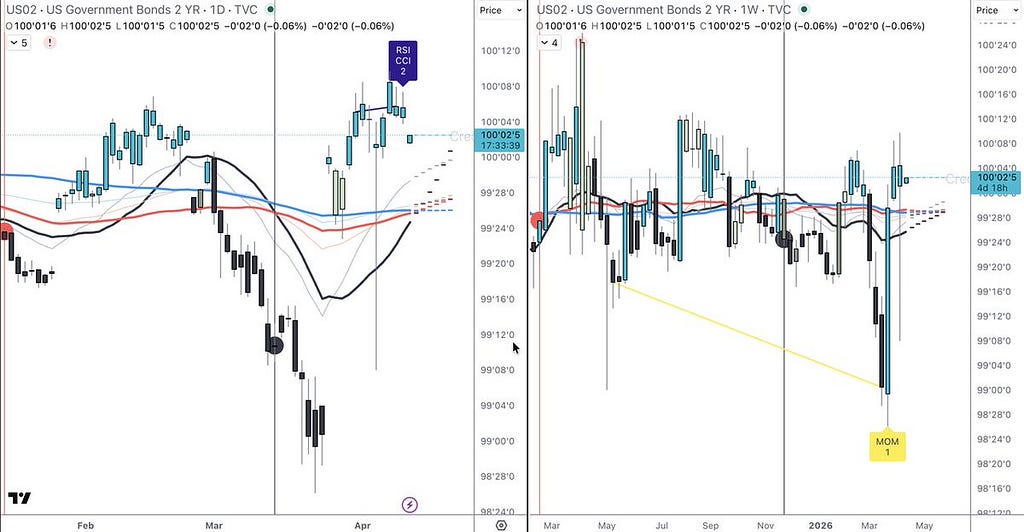
- Daily price (100.025) has broken above all moving averages; MA20 has crossed above MA120 = short-, medium-, and long-term momentum converging upward, confirming a strong rally
- Key support levels (99.13, 99.25) are well below the current price → Moving average slopes are forced upward, failing to suppress prices and instead providing support
- As long as 99.25 is held, the bullish support structure remains valid
- Weekly moving averages have diverged upward with increased volume after a “twisted convergence” = The long-term bearish trend has completely collapsed; this is not a rebound, but a trend reversal
(2) CFTC Analysis:
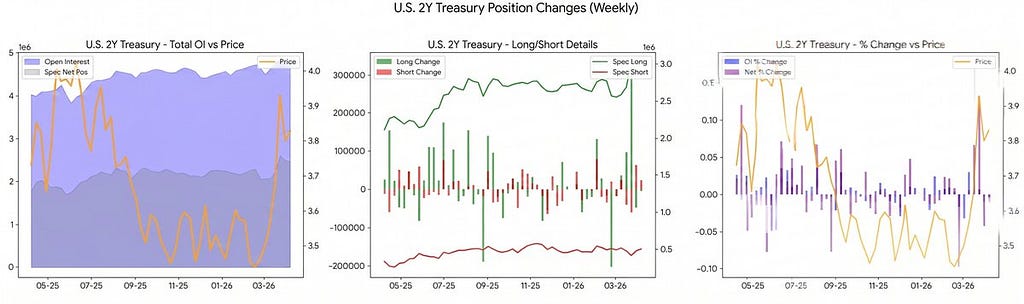
- Rising yields (falling bond prices) + significant reduction in speculators’ net positions + longs exiting, shorts adding positions
- Speculators are voting with their feet, rejecting this candlestick rebound
10-Year U.S. Treasury: Bears remain in control, but bottom-fishing has begun. Wait for a break above 111.44 to go long; exit if it falls below 110.68.
(1) Price Action: In stark contrast to the strong reversal in the 2-year Treasury, the 10-year Treasury currently resides in a classic bear-dominated zone, forming a standard downtrend channel.
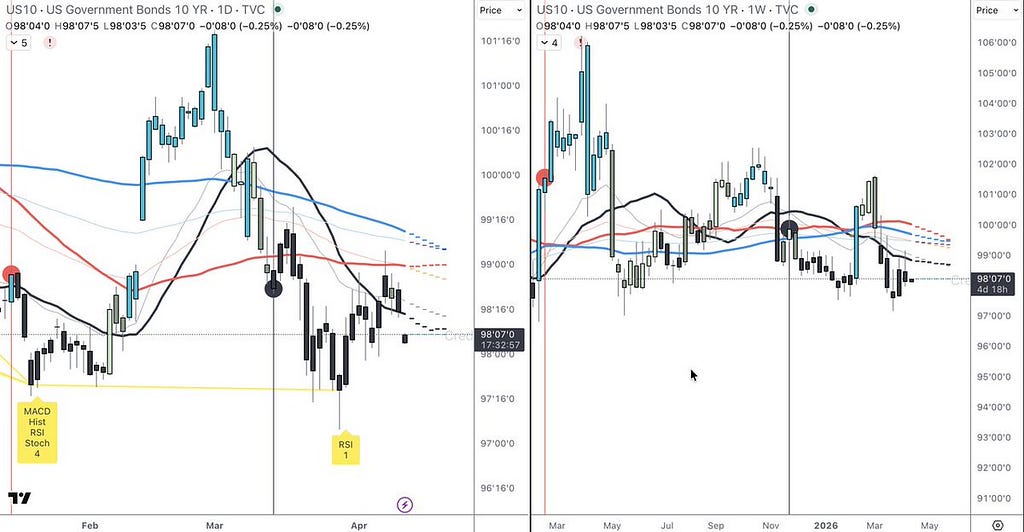
- The daily chart shows a perfect bearish alignment, with prices below all moving averages
- The moving average is above the current price → Moving averages will continue to press down, and any rebound will be capped
- The weekly chart shows a breakout with heavy volume; the medium-term trend has broken down. A reversal requires a sustained move above 99, which is a long way off
(2) Options: The current 10-year U.S. Treasury options market shows “solid support and a slight recovery in momentum”
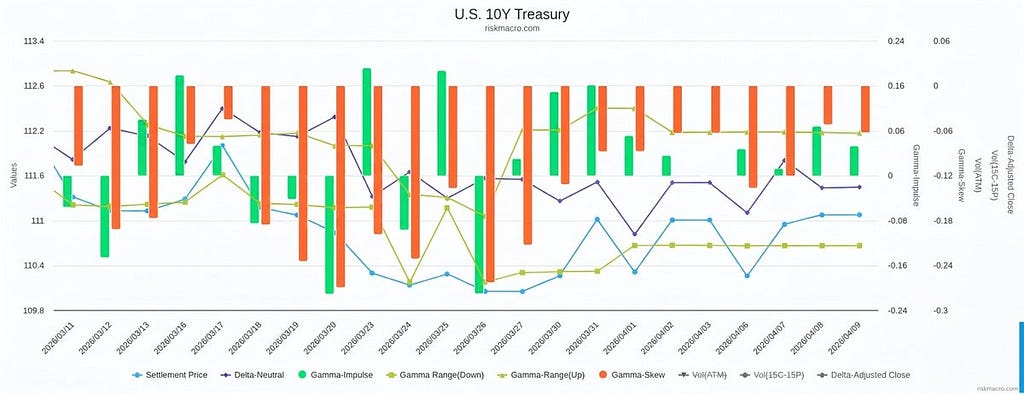
- Price (111.10) oscillates near the lower boundary of the Gamma (110.68); repeated failure to break through = strong support
- The DN line (111.44) marks the bull-bear dividing line; current price is below it = bulls have not taken control
- The market is still hedging against a decline; there are tentative buyers at the bottom
- A break below 110.68 would accelerate the decline; a move above 111.44 is required to even consider a rebound, with a target of 112.18
(3) CFTC:
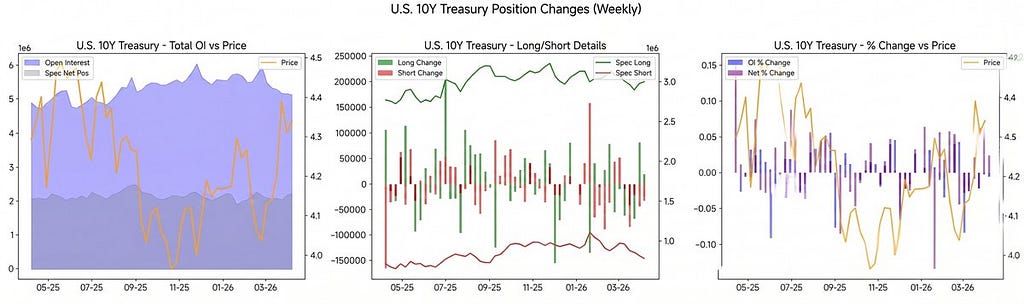
- Yields rose (4.34%), and speculators’ net positions increased (2,217,237). This suggests that “smart money” may be betting that yields have peaked, with the trend shifting in favor of longs.
- Long positions increased, while short positions decreased.